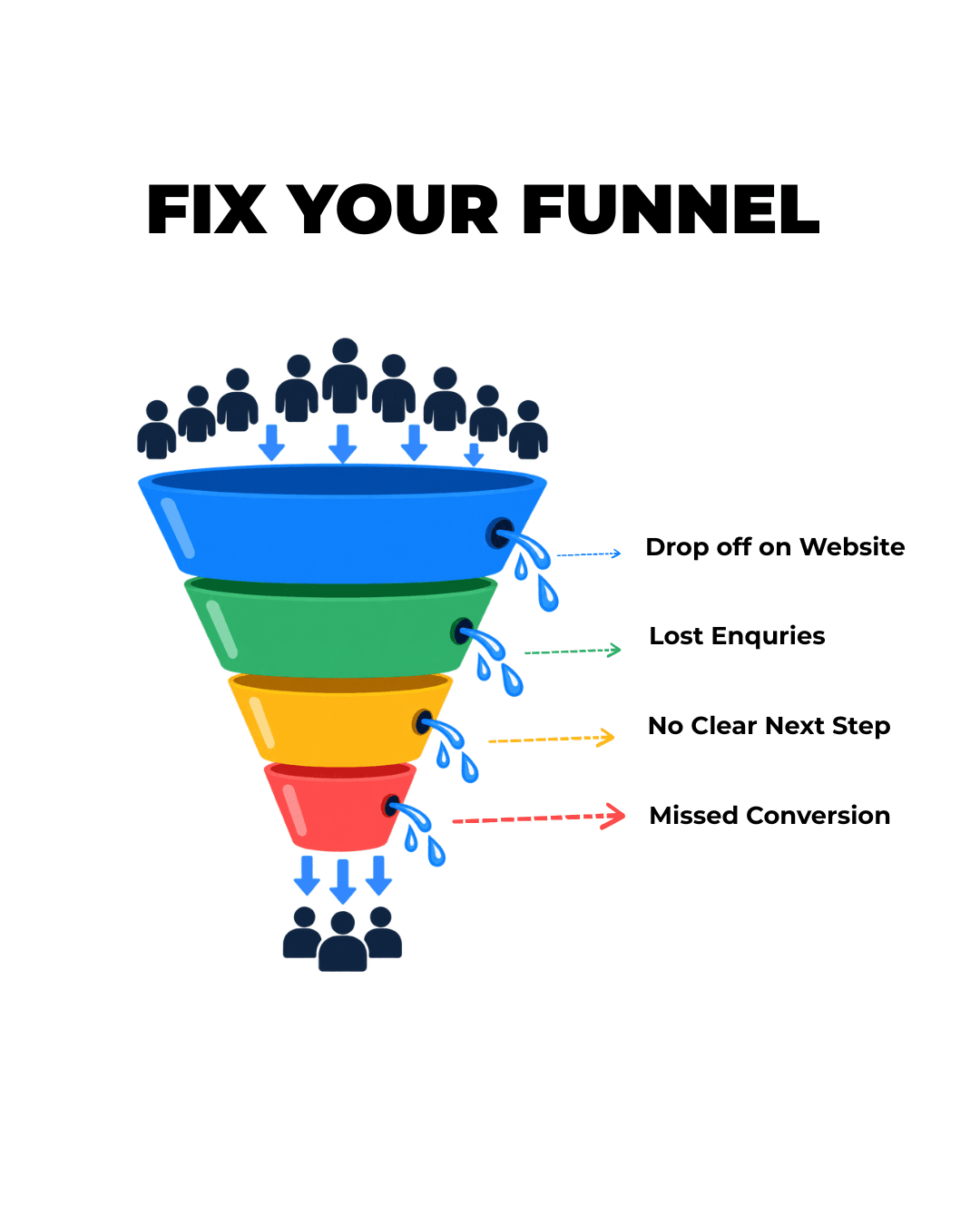
The Problem Isn't Always Lead Generation
When sales slow down, businesses often look for more leads.
More marketing. More enquiries. More spending.
But sometimes, the problem isn't getting leads.
It's what happens after an enquiry comes in.
A potential customer shows interest. Nobody follows up.
Another enquiry arrives. It gets lost in a spreadsheet or WhatsApp conversation.
Some prospects are ready to buy, but nobody takes the next step.
The business isn't necessarily lacking leads. It may be lacking a process.
Find the Leak
Every business has a journey from attracting attention to converting potential customers into buyers.
Visitors become enquiries. Enquiries need follow-ups. Follow-ups create opportunities. Opportunities can become customers.
When one stage breaks down, potential customers can slip away.
Instead of immediately investing more in lead generation, ask yourself:
- Are enquiries being followed up consistently?
- Does every lead have a clear next action?
- Can you see which leads are waiting for a response?
- Do you know where potential customers drop off?
- Are promising opportunities being forgotten?
You don't need a complicated system to start answering these questions.
You need visibility, consistency, and a clear process.
A Simple Example
Imagine a business receives 50 enquiries in a month.
The team responds to some immediately, follows up with a few others, and forgets the rest.
By the end of the month, the owner knows how many enquiries arrived but cannot clearly explain what happened to each one.
The business might assume it needs more leads.
But before increasing its marketing spend, it should understand how existing enquiries are being handled.
Are people receiving timely responses? Are follow-ups scheduled? Are conversations moving towards a decision?
Without answers, generating more enquiries may simply create more work for an already inconsistent process.
The numbers in this example are illustrative, but the underlying problem is common: activity alone doesn't guarantee progress.
Fix the Process Before Scaling
Start with three simple steps.
1. Track Every Enquiry
Keep a record of who contacted the business, when they contacted it, and what they are interested in.
2. Define the Next Action
Every active lead should have a clear next step, such as a phone call, a follow-up message, a meeting, or a proposal.
3. Review What Happens Next
Look at how many enquiries receive responses, how many move forward, and where conversations stop progressing.
These small habits help businesses identify gaps before spending more money to generate additional demand.
Better Systems Create Better Opportunities
Growth isn't only about attracting attention.
It's also about building a reliable process for handling the opportunities that attention creates.
When enquiries are organised, follow-ups are consistent, and next actions are visible, a business can make better decisions about where to improve.
Technology can help support this process, but the first step is understanding how work currently happens.
You don't need to automate everything on day one. Start by making the process clear, then improve it as the business grows.
The Takeaway
More leads can create more opportunities.
But without the right process, they can also create more missed opportunities.
Before asking how to generate more enquiries, ask whether your business is making the most of the ones it already receives.
Find the leak. Fix the process. Then scale.
That's how I think about business growth—not just generating more activity, but building better systems that help businesses turn opportunities into results.